
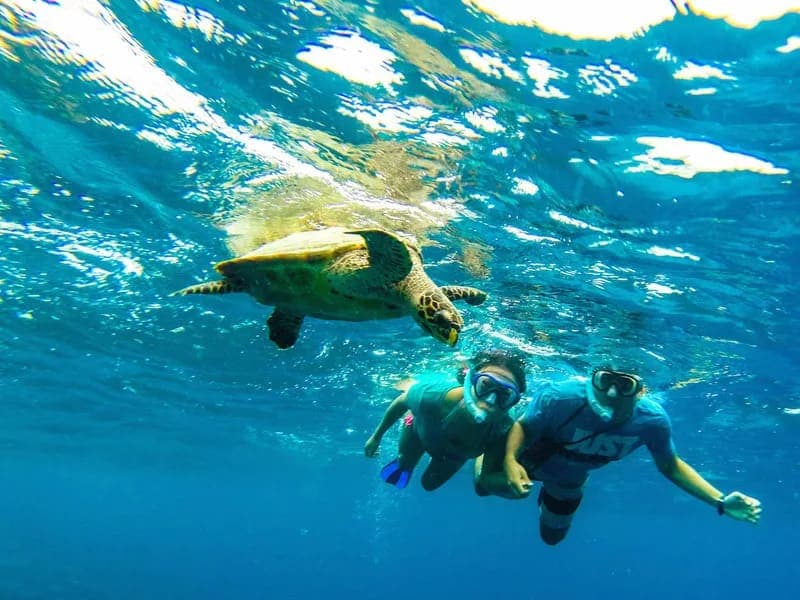
The Daymaniyat Islands (also spelled Dimaniyat, or Ad Dimaniyat in Arabic transliteration) are a chain of nine uninhabited islands and a protected nature reserve located approximately 18 km off the Al Batinah coast of Oman, north of Muscat. Declared a nature reserve by the Sultanate of Oman in 1996, the islands are widely recognised as one of the richest marine biodiversity sites in the Arabian Sea - with healthy coral reefs, year-round sea turtle activity, and seasonal whale shark passages.
Where the Islands Are
The Daymaniyat Islands sit roughly halfway between Muscat and the town of Barka, around 18 km offshore. From Al Mouj Marina in Muscat, the boat ride is 45–50 minutes depending on sea conditions. The marina itself is approximately 15 minutes from Muscat International Airport and 25 minutes from central Muscat.
Marine Life
Sea Turtles
Hawksbill (critically endangered globally) and green sea turtles are the most reliably-sighted large marine animals at the Daymaniyat Islands. They are present year-round in the reef areas where snorkellers swim, and the islands themselves are an important nesting ground from May to October. During nesting season, landing on the islands is restricted to protect nesting sites and hatching turtles.
Coral Reefs
The islands are surrounded by both hard and soft coral formations in relatively shallow water - most snorkelling sites are between 3 and 15 metres deep. This makes the Daymaniyat one of the rare destinations where snorkellers can see most of what divers see without going deeper than a comfortable mask-down.
Fish Species
More than 250 species of reef fish have been documented around the islands, including butterflyfish, angelfish, parrotfish, clownfish in their host anemones, snappers, emperors and groupers (hammour). Schools of fusiliers and jacks are common in the deeper passages between islands.
Whale Sharks (Seasonal)
From June to November, whale sharks - the world’s largest fish - pass through the waters around the Daymaniyat Islands. They are harmless filter feeders, and swimming alongside one is a genuine bucket-list experience. Sightings are not guaranteed in any given week, but the seasonal window is consistent.
Other Wildlife
Stingrays, moray eels, octopus and the occasional reef shark complete the picture underwater. Above water, the islands host nesting seabirds and the boat ride out frequently encounters pods of spinner and bottlenose dolphins.
Rules and Permits
- Ministry of Environment snorkelling permits are required for every visitor
- Landing on the islands is restricted from May to October (turtle nesting season)
- Fishing is prohibited within the reserve boundaries
- No collecting shells, coral, sand or marine life
- No touching, chasing or feeding turtles, fish or other wildlife
- No anchoring directly on coral - licensed boats use designated moorings
- Reef-safe sunscreen strongly preferred (oxybenzone-free)
Best Time to Visit
October to May is the prime window - calmest seas, clearest water (typically 15–25 metres of visibility), comfortable air temperature, and unrestricted access to the islands themselves.
June to September brings warmer water (28–32°C) and whale shark season, which peaks from late August. Seas can be choppier and island landings are restricted, but snorkelling in the surrounding waters remains excellent.
June to November is whale shark season. If a whale shark sighting is the main priority of your trip, aim for late August to early October, when sightings peak.
Book a Tour to the Daymaniyat Islands
Horizon Blue runs daily snorkelling tours from Al Mouj Marina to the Daymaniyat Islands - shared half-day trips, private half-day or full-day charters, and combined fishing-and-snorkelling full days on request.
- Sharing Half Day Snorkelling →
- Private Half Day Snorkelling →
- Private Full Day Snorkelling →
- Private Fishing Charter →
Frequently Asked Questions
Where are the Daymaniyat Islands?
The Daymaniyat Islands are a chain of nine small islands located approximately 18 km off the Al Batinah coast of Oman, north of Muscat. They are only accessible by boat - most operators, including Horizon Blue, depart from Al Mouj Marina in Muscat, a 45–50 minute boat ride.
Are the Daymaniyat Islands a protected area?
Yes. The Daymaniyat Islands were declared a Nature Reserve by the Sultanate of Oman in 1996. Visitors require permits from the Ministry of Environment (included on sharing tours, charged separately on private charters), fishing is prohibited within the reserve boundaries, and touching coral, turtles or other wildlife is not allowed.
When is the best time to visit the Daymaniyat Islands?
October to May offers the calmest seas, best underwater visibility (typically 15–25 metres) and the most comfortable weather. Sea turtle nesting season runs May to October - during these months landing on the islands themselves is restricted, but snorkelling in the surrounding waters is still permitted and excellent.
What can you see snorkelling at the Daymaniyat Islands?
Hawksbill and green sea turtles year-round, hundreds of species of tropical reef fish (butterflyfish, parrotfish, angelfish, clownfish, snappers, groupers), vibrant hard and soft corals, stingrays and moray eels. Whale sharks pass through the area seasonally, typically June to November. Dolphins are common during the boat ride.
How do I visit the Daymaniyat Islands?
The Daymaniyat Islands are only accessible by licensed boat. Horizon Blue runs daily snorkelling tours from Al Mouj Marina in Muscat - choose between a shared half-day tour (most popular, from 30 OMR per adult) or an exclusive private charter (250 OMR half day, 350 OMR full day, plus permits).
Can I dive at the Daymaniyat Islands?
Yes, the Daymaniyat Islands are a recognised diving destination - though Horizon Blue specialises in snorkelling tours. The relatively shallow reefs (3–15 metres in most snorkelling areas) make the islands one of the few places worldwide where snorkellers see roughly what divers see.