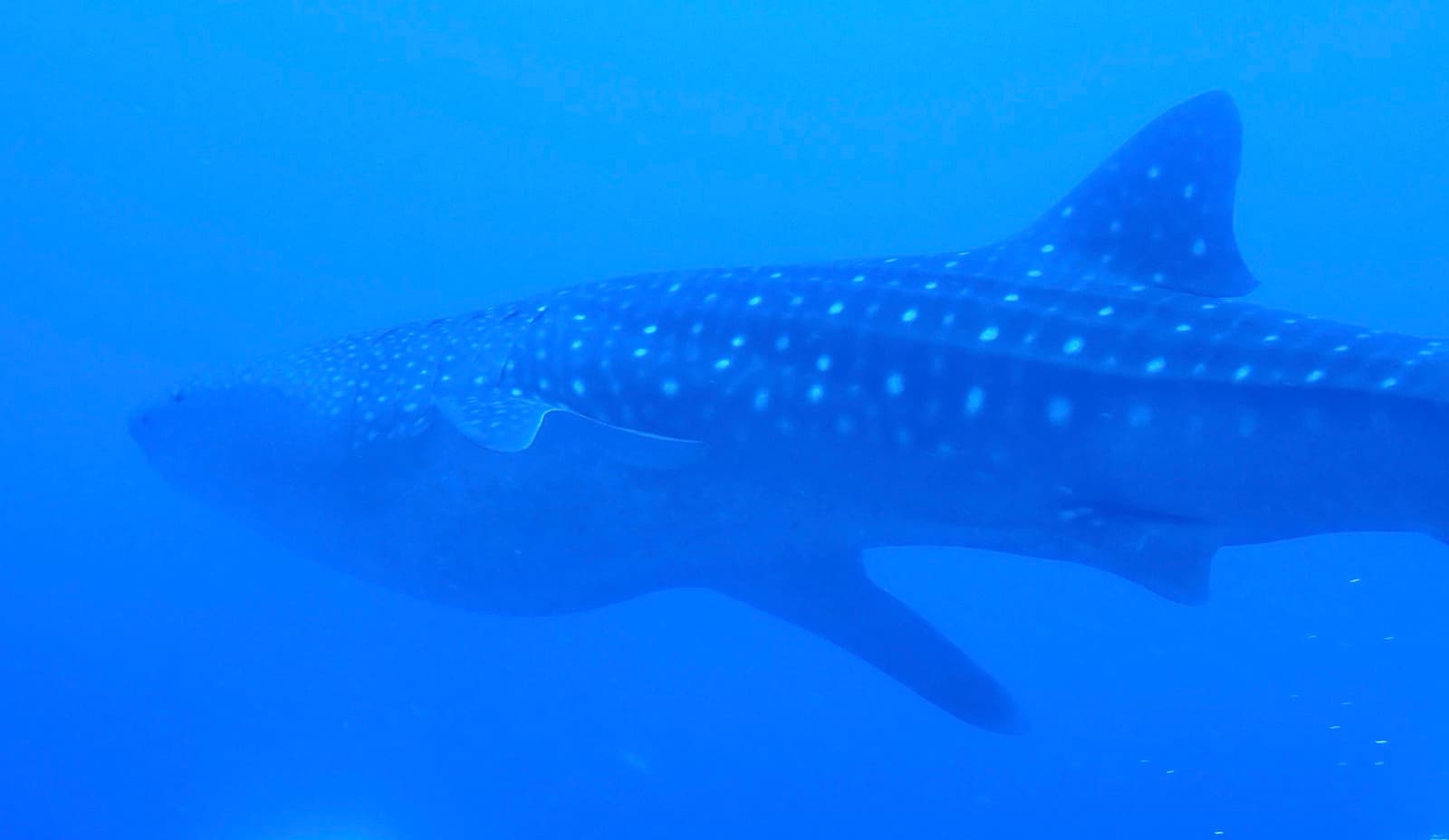
Every year, as the summer plankton blooms drift along Oman's coast, the biggest fish in the sea comes with them. From roughly June to November — peaking from late August to early October — whale sharks cruise through the waters around the Daymaniyat Islands, and swimming beside one is the single most requested experience on our boats.
This is the honest version of the whale shark guide: when to come, where they show up, what your real chances are, and how to do it properly.
When Is Whale Shark Season in Oman?
Whale sharks appear in Omani waters from about June through November. The sweet spot is late August to early October, when sightings around the Daymaniyat Islands go from occasional to regular. If a whale shark is the main reason for your trip, aim for September — you'll also get warm water and the tail end of the calm summer seas.
Outside the season, encounters do happen — the sea doesn't read calendars — but they're rare enough that we'd never sell you a winter trip on the promise of one. Winter's superpower is visibility and turtles instead; our complete Daymaniyat snorkelling guide covers what each season does best.
Where Do You See Them?
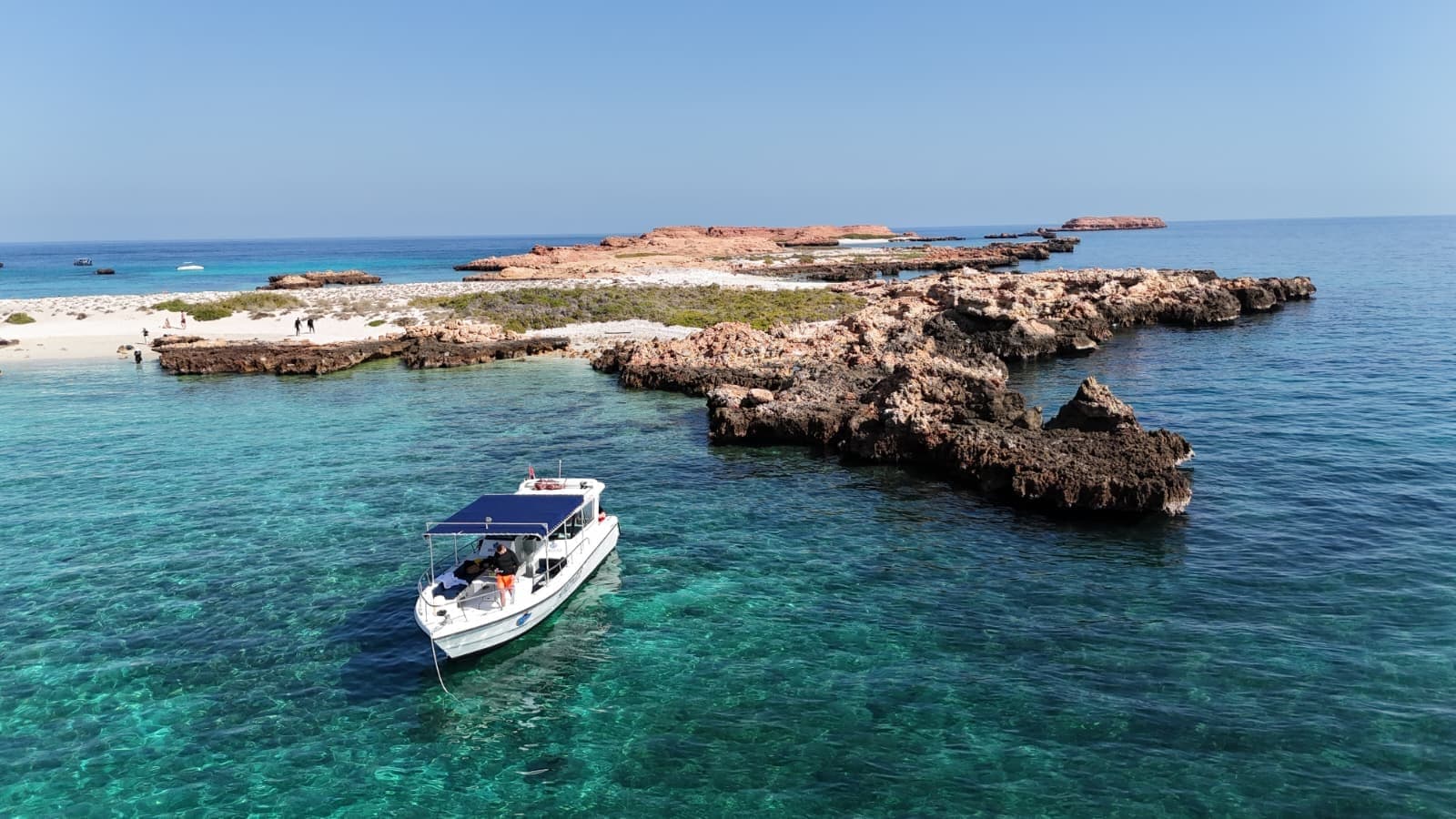
The waters in and around the Daymaniyat Islands Nature Reserve, about 18 km off the coast between Muscat and Barka, are one of the most dependable whale shark areas in the region. The same nutrient-rich currents that feed the reserve's coral reefs pull in the plankton clouds whale sharks feed on. Fahal Island, closer to Muscat, gets passing visits too — but the Daymaniyats are where our crews see them most.
What Are the Odds, Honestly?
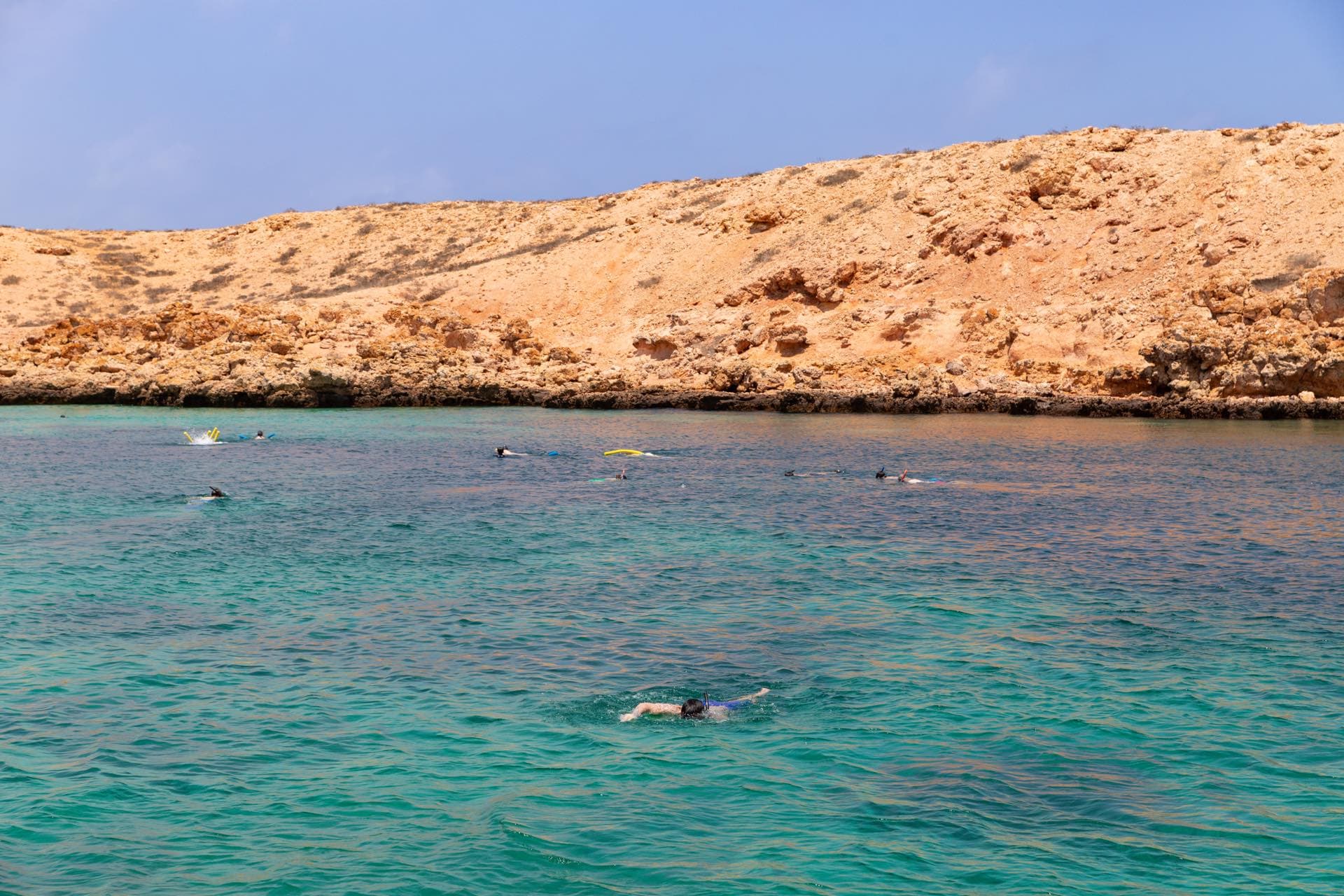
No wild animal is guaranteed, and anyone guaranteeing a whale shark is selling you something else. What we can tell you: in the peak weeks our captains and the other crews working the reserve share sightings over the radio in real time, so when a shark is in the area, the fleet knows. On a peak-season trip your odds are genuinely good — and if the giants don't show, you're still snorkelling one of the best reefs in Arabia with turtles, rays and thousands of reef fish.
The first thing everyone says afterwards is the same: you don't understand the size until the spots slide past you, and keep sliding, and keep sliding.
What's It Actually Like?
A whale shark encounter at the Daymaniyats usually starts with a shout from the captain and ends with your heart pounding. You slip into the water, put your face down, and a shape the size of a minibus glides underneath you — unhurried, spotted like a night sky, mouth wide open sieving plankton. They typically range from 4 to 10 metres here, many of them juveniles. They are filter feeders: no teeth worth mentioning, no interest in you, no drama. Just scale.
The Rules: How to Swim with a Whale Shark Responsibly
- Keep 3–4 metres from the body, and more from the tail — one lazy sweep of it is stronger than any swimmer
- Never touch. The film on their skin protects them from infection
- Don't chase or block its path — swim alongside, let the shark decide how close
- No flash photography
- Follow the crew's briefing; inside the nature reserve the Environment Authority's rules apply and we take them seriously
Handled this way, encounters stay calm and long — the shark keeps feeding, and you get minutes rather than seconds beside it.
Planning a Whale Shark Trip
There's no separate "whale shark tour" — sightings happen on our normal snorkelling trips when the season delivers. The sharing half-day snorkelling tour (30 OMR per adult, departs Al Mouj Marina daily at 8:30 AM and 2:30 PM) is the easiest way in; a private charter gives you the flexibility to linger when one appears.
Two practical tips from the crew: book the morning departure — seas are calmer and feeding activity tends to be better — and if you're in Muscat for several days in season, come early in your stay so there's room to try again if the sea says no.
You can book online in about two minutes, with free cancellation up to 24 hours before departure — or message us on WhatsApp at +968 93232 837 and ask what the water's been doing this week. We'll tell you straight.
See you out there.