Imagine a guest who turns up at your house, walks in with muddy shoes, pokes your sleeping cat, helps themselves to an ornament off the shelf and leaves a crisp packet on the sofa. You would not invite them back. Now imagine the house is a coral reef, the cat is a hawksbill turtle, and the guests arrive by the boatload every morning.
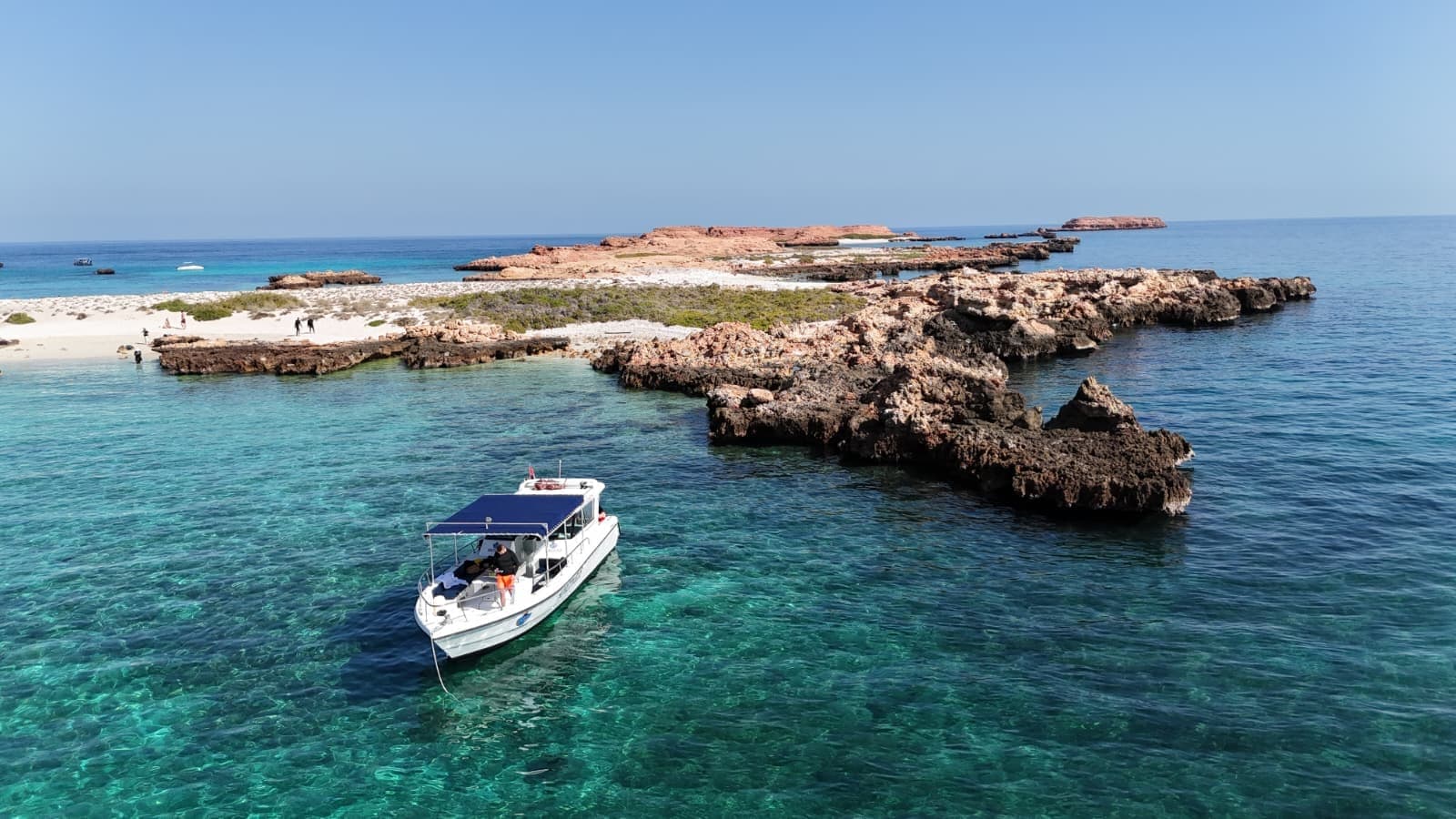
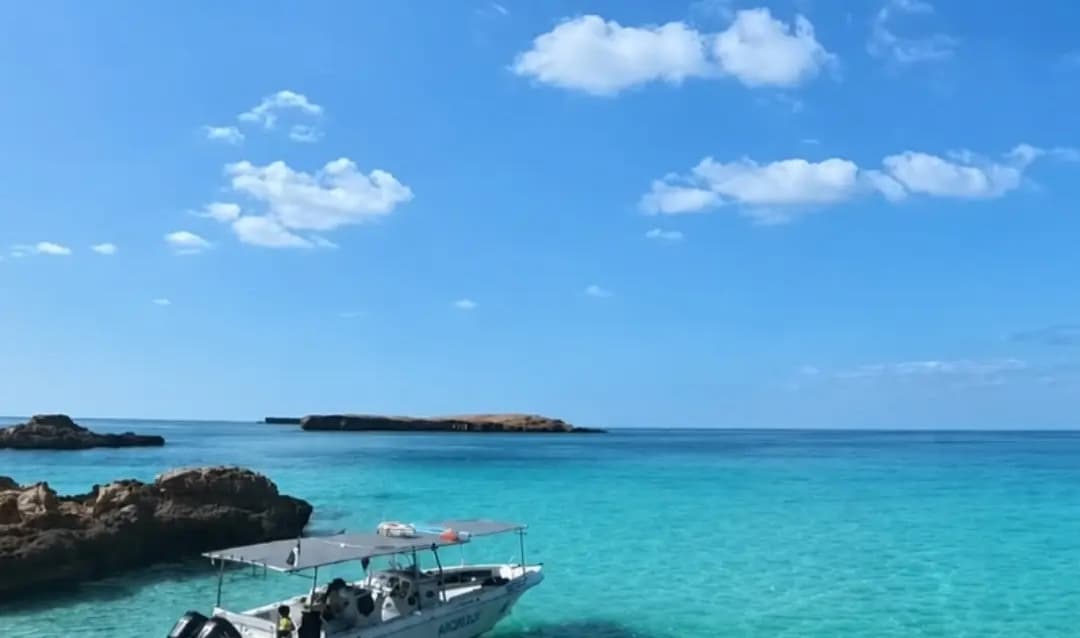
That is the Daymaniyat Islands (also spelled Dimaniyat, or Ad Dimaniyat) from the reef's point of view. Nine small islands, protected since 1996, home to nesting turtles, breeding seabirds and some of the healthiest coral in the Gulf of Oman, hosting thousands of us a year. The turtles never agreed to any of it. So the least we can do is take our shoes off at the door, keep our hands to ourselves and leave the place exactly as we found it.


This is our guide to being the guest who gets invited back. The rules come from Oman's Environment Authority, which runs the reserve; the habits come from our crew, who are out there most days and have seen every kind of visitor.
Rule one: you need an invitation
Every visitor to the Daymaniyat Islands Nature Reserve needs an Environment Authority permit. It is not a formality we invented; it is how the reserve counts and limits its guests, and the fee goes to the Authority rather than to us. When you book with Horizon Blue, we arrange it and add it to your booking (OMR 3 per adult and OMR 1 per child on the sharing tour), so all you need to do is turn up at the marina.
The reserve also has opening hours of a sort. From 1 May to 31 October the beaches are closed so turtles can nest and seabirds can raise their chicks in peace, and we snorkel straight from the boat. From 1 November to 30 April you can land, walk and swim from the sand. If you are here in beach season, read our guide to the November reopening first.

The sunscreen conversation
Here is the one most people have never thought about. A lot of ordinary sunscreen contains chemical filters called oxybenzone and octinoxate, and when a boatload of snorkellers slides into the water, a measurable amount of it comes off and settles on the reef. Research has linked these two chemicals to coral bleaching and to damage to coral DNA, which is why Hawaii and Key West have banned their sale. Coral that is already coping with warming seas does not need a chemistry experiment on top.
What to do instead:
- Turn the bottle round. Ignore the words "reef-friendly" on the front and read the ingredients on the back. If you see oxybenzone or octinoxate, leave it at home. Octocrylene is best avoided too.
- Go mineral. Look for non-nano zinc oxide or titanium dioxide. These sit on your skin and reflect the sun rather than soaking in, and the "non-nano" part means the particles are too big for small sea creatures to swallow.
- Lotion, not spray. Sprays go everywhere except on you, including into the sea breeze and onto the deck.
- Put it on at the marina, not on the boat. Sunscreen needs about 20 minutes to bind to your skin. Applied at the marina, it stays on you; applied thirty seconds before you jump in, it stays in the sea.
- Cover up. A long-sleeved rash vest, a hat and sunglasses do most of the job with no chemicals at all, and nobody has ever regretted a rash vest on the boat ride home.
Hands to yourself
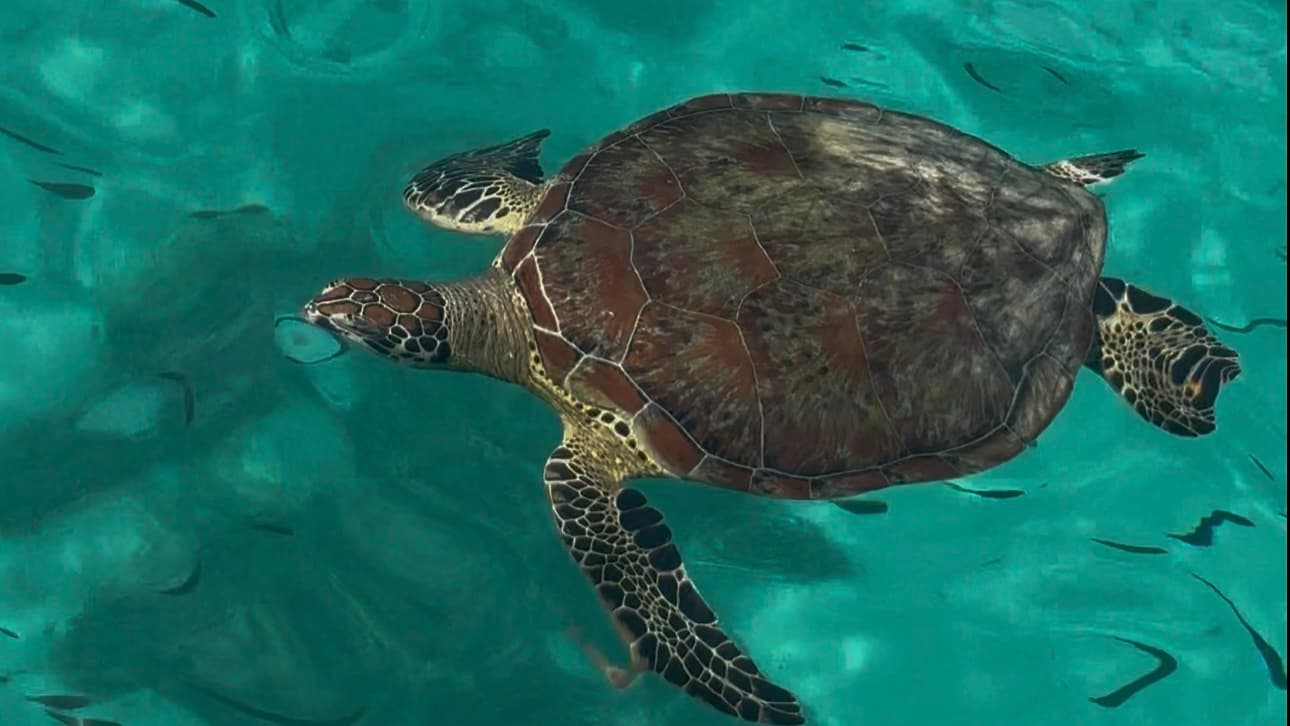
Turtles are the headline act at the Daymaniyats, and the temptation to get close is real. Here is the etiquette, and it is also the law: touching, chasing, feeding or riding a turtle is prohibited, and so is disturbing a nest or eggs on the beach.
A few things make the encounter better for everyone:
- Keep about three metres away, roughly two body lengths. A turtle that is not worried about you will carry on feeding, and that is the photo you want.
- Approach from the side, slowly. Never from above. Turtles breathe air and have to come up for it; a snorkeller hovering overhead is a locked door.
- Two people per turtle. If three or four of you crowd in, the turtle leaves and nobody gets a good look. Take turns.
- Read the body language. If it changes direction, speeds up or tucks its flippers in, you are too close. Back off and let it go about its day.
- No flash, no torches. Bright light stresses them. Natural light is kinder and, honestly, the photos look better.


The same manners apply to everything else down there. Blacktip reef sharks are shy and will keep their own distance. Rays rest on the sand and will move if you give them room. Clownfish will dart in and out of their anemone whether you wave at them or not, so there is no need to.
Mind your fins
Coral looks like rock and behaves like a very slow animal. A fin kick that would not scratch a stone can snap off decades of growth, and a hand on the reef to steady yourself does the same. Most of the damage on busy reefs comes from people who did not mean to do anything.
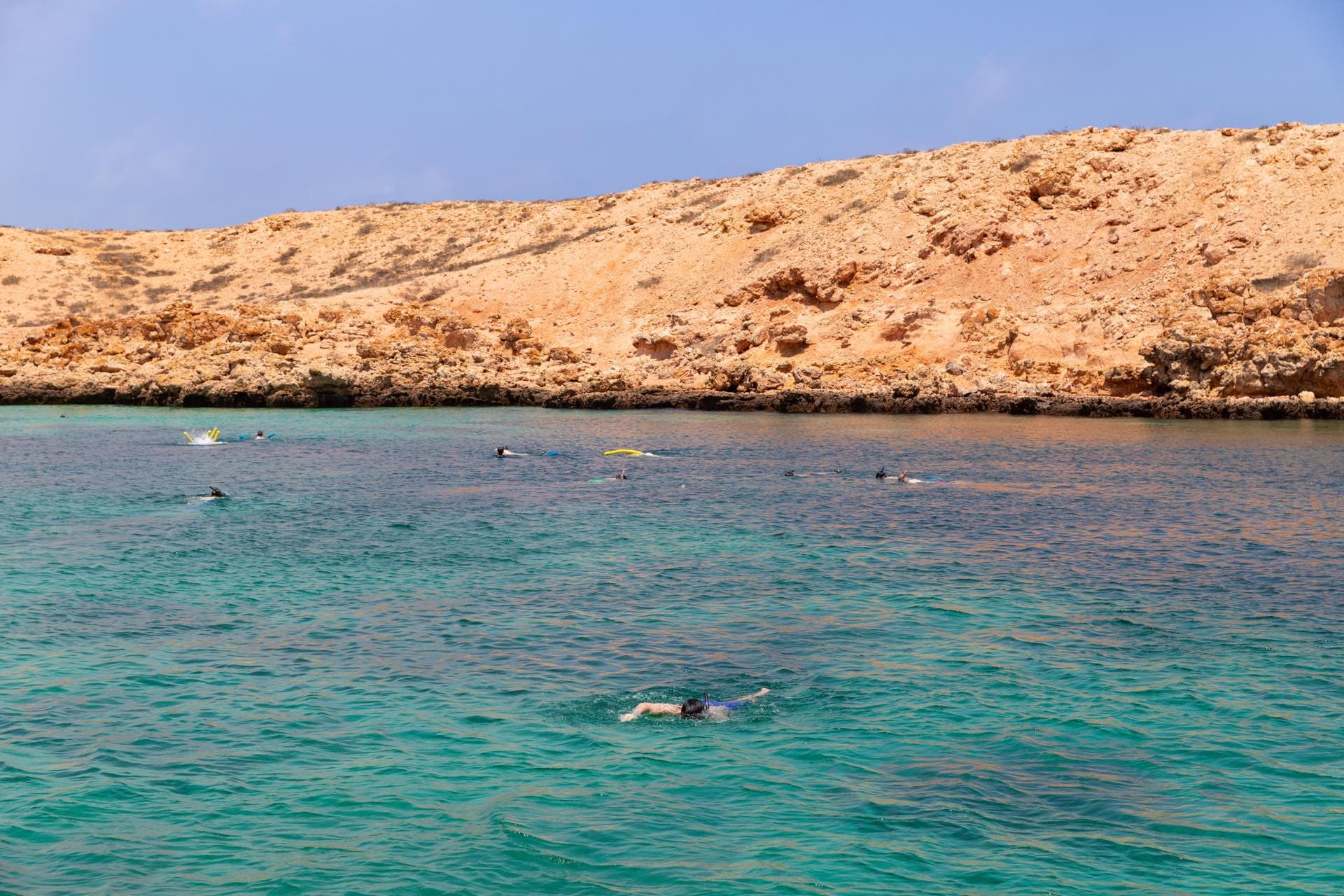
- Stay horizontal and kick from the hip with slow, small movements. Keep your fins up when you are near coral.
- Do not stand on anything that is not sand. If you need a rest, turn onto your back and float, or swim back to the boat; our crew will help you aboard.
- No gloves. They make it far too easy to grab the reef.
- Do not feed the fish. Bread and crisps are not reef food, and a reef where fish expect handouts behaves strangely.
- Let the captain worry about the anchor. We moor where we will not touch coral. That is one of the reasons we ask guests not to swim off on their own.

Take only photos, and we mean it
The rulebook lists it plainly: collecting or destroying coral, shells, stones, fossils or any marine life in the reserve is prohibited. That includes the pretty bleached shell on the beach. Empty shells become hermit crab homes and, eventually, the sand itself. Picking one up feels harmless; a few thousand visitors each picking one up is how a beach disappears.
The same decision bans bringing anything living onto the islands: plants, seeds, and pets of any kind. Island ecosystems are small and have no defences against a new arrival, however cute.
Nothing overboard, ever
This is the simplest rule and the one with the biggest effect. A plastic bottle dropped at the Daymaniyats does not float away to somewhere else; it floats around the reef for years, and a bag in the water looks exactly like a jellyfish to a turtle. So:
- Bins are on the boat. Use them. Cigarette butts are litter too, and they are toxic to fish.
- Bring a refillable bottle. We carry chilled water and will top you up all day. One reusable bottle instead of four single-use ones is the easiest good deed on the trip.
- Keep an eye on the small stuff. Snack wrappers, bottle caps and the little plastic tag off a new pair of sunglasses are the things the wind takes.
- If you see litter, grab it. Our crew collect what they find, and we have never once minded a guest handing us someone else's rubbish.

On the beach (November to April)
When landing is allowed, the islands are still a reserve rather than a resort. Stick to the sand and obvious paths rather than trampling the scrub, which is where seabirds nest. Keep your voice down near the birds; a colony that takes off in a panic leaves eggs and chicks exposed to the sun. If you spot turtle tracks or a dip in the sand that could be a nest, give it a wide berth and tell the crew. Camping and barbecues are allowed only at designated spots on two of the islands, with fires out by 9 PM, and only outside the closed season.

What we do on our side
Good hosting is a two-way thing, so here is our part of the bargain:
- Permits for everyone, arranged before you arrive.
- A briefing before the first stop, so the rules are fresh when it matters.
- Moorings away from the coral, chosen by captains who have been working these islands for decades.
- Bins and refills on board, so there is no reason for anything to go over the side.
- Small snorkel groups and a crew member in the water, which keeps people together and off the reef.
- Stop lists that follow the wildlife, not the other way round. If a site is crowded or a turtle is clearly unsettled, we move on.

The short version
Reef-safe sunscreen or a rash vest. Three metres from the turtles, approached from the side. Fins up, hands off, nothing picked up and nothing dropped. A refillable bottle and the bins on the boat. Beaches only in season. Follow those and you are not just a visitor to the Daymaniyats; you are the kind of guest the place can afford to keep having.
Ready to visit politely? The sharing half-day tour leaves Al Mouj Marina daily at 8:30 AM and 2:30 PM, and you can book online in a couple of minutes or message us on WhatsApp at +968 93232 837. For what you are likely to see down there, our complete Daymaniyat snorkelling guide has the full cast list. The turtles will be home. Wipe your feet.