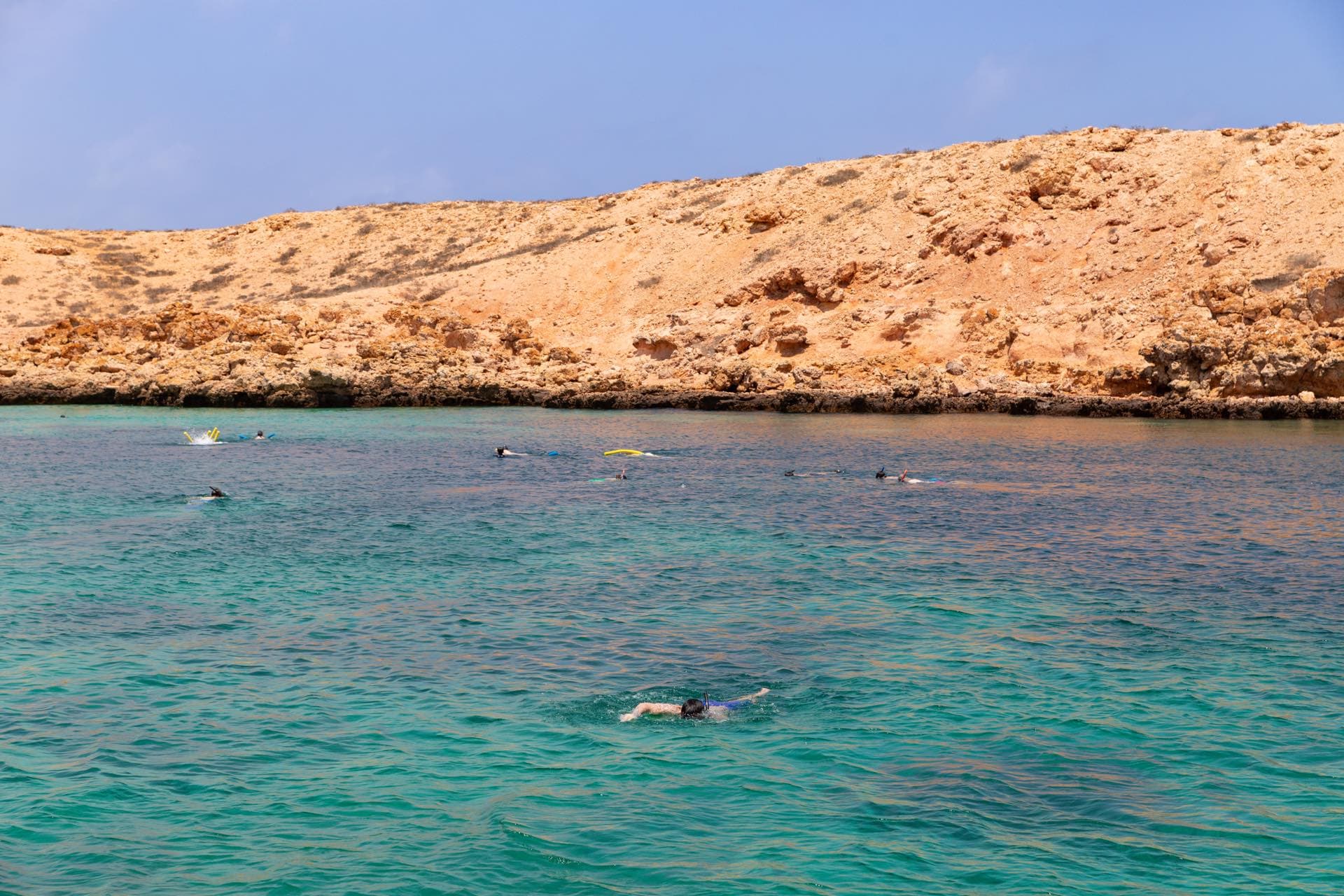
Ask when to visit the Daymaniyat Islands and most guides recite the same answer: October to April. Cooler air, glassy visibility, open beaches. It's not wrong — but it quietly writes off the month our crews would pick for themselves. September is the insiders' month at the Daymaniyats, and it never gets the write-up it deserves. This is that write-up.
The Giants Are Still Here — and This Is Their Best Month
Whale shark season in Oman runs roughly June to November, peaking from late August to early October — which puts September dead centre in the strongest weeks of the year. The monsoon-driven plankton blooms that feed the whole Sea of Oman are at their late-summer richest, and the biggest fish in the ocean follows them right past the reserve. Our whale shark guide says it plainly: if a whale shark is the main reason for your trip, aim for September.
A detail worth knowing: encounters often start before the snorkelling does. Whale sharks feed in the open water between the coast and the islands, so the shout from the captain frequently comes mid-crossing — the trip out is part of the safari. And as always, the honest caveat: no wild animal is guaranteed, and anyone who promises one is selling something else. What September gives you is the best odds on the calendar.
The One Trade-Off Nobody Explains Properly
Here's the part most operators skip. The same plankton that pulls in the whale sharks can tint the water green on some September days, and visibility — gin-clear in midwinter — becomes a lottery: one morning you'll get sparkling blue, the next a soupier green that's absolutely alive with feeding fish. Green water is feeding water. The clearest sea of the year comes in the winter months (our complete Daymaniyat guide covers what each season does best); September trades a little clarity for a lot of life. We think it's the best deal on the calendar — but we'd rather you choose it knowing the terms.
The winter sea is a window. The September sea is a kitchen — busier, murkier some days, and the reason everything big shows up.
No, the Islands Aren't 'Closed'
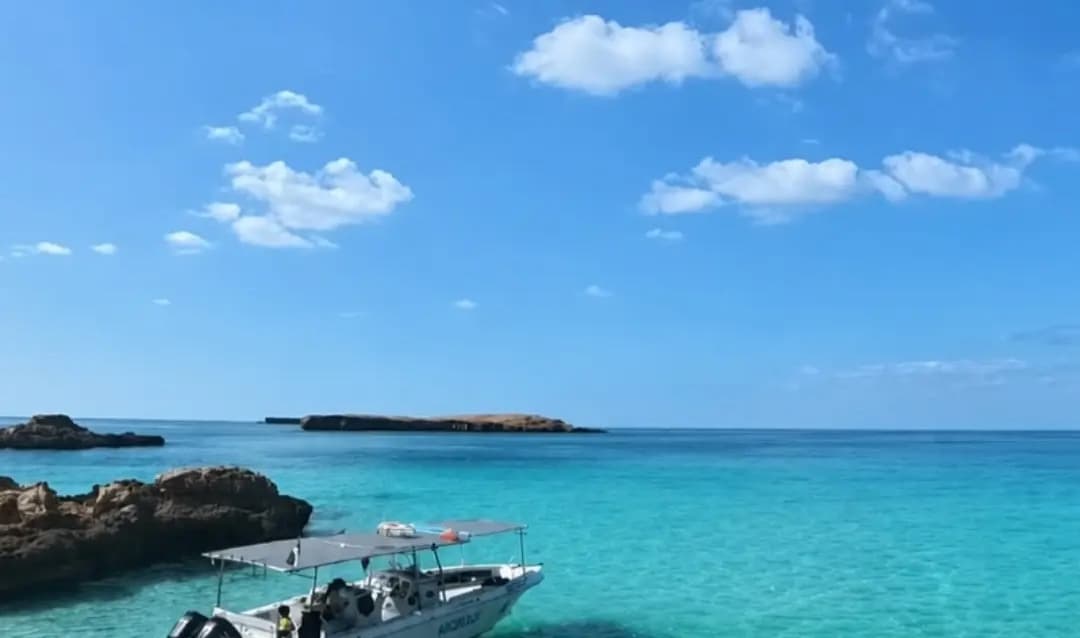
Every September we hear the same worry: aren't the Daymaniyats shut? Here's the actual rule. Landing on the islands' beaches is closed from 1 May to 31 October to protect nesting turtles and breeding seabirds. The water is open all year. Snorkelling, swimming and cruising the reserve from the boat — which is how our trips run in every season — carry on exactly as normal, permit and all (we arrange it). What the closure really means in September is this: no picnicking day-trippers, no footprints, nine islands running wild at full volume while you float along their edge.
The Falcon Show Nobody Mentions
Here's September's best-kept secret, and it happens above the waterline. The Daymaniyats are one of the world's strongholds of the sooty falcon — a slate-grey, IUCN-Vulnerable falcon with one of the strangest calendars in the bird world. Around 90–100 pairs breed across the Daymaniyat, As Suwadi and Fahal islands — Oman likely holds the largest breeding population anywhere in the Arabian Sea basin — and they nest deliberately late, timing their chicks to hatch just as the autumn songbird migration from Eurasia to Africa streams overhead. Free food, delivered by the sky.
By September the colonies are at their absolute busiest: adults hunting over the water, nests full, and the first young fledging from about 19 September. You'll watch it all from the boat — the landing closure exists precisely to give them the islands — and between snorkel stops it turns the reserve into a wildlife documentary with the sound on.
Below the Surface: Business as Usual, Which Is to Say Spectacular
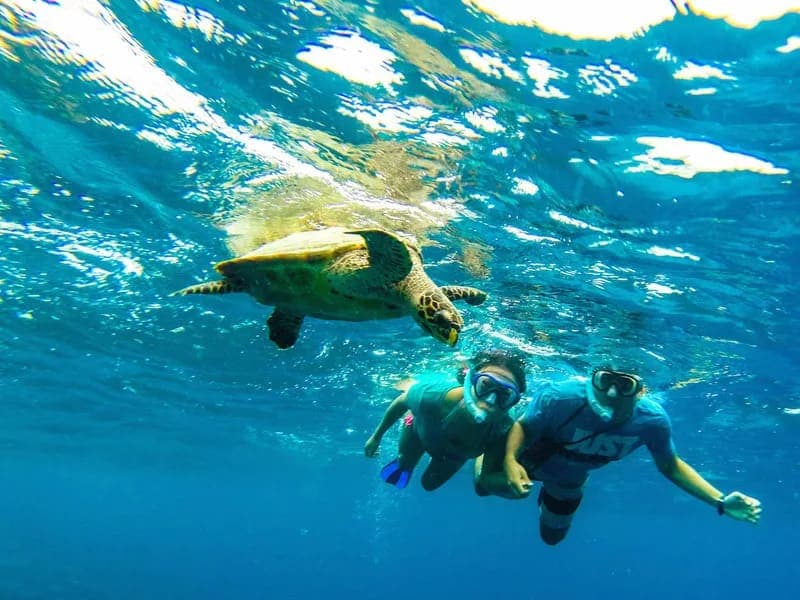
The reserve's residents don't do seasons. Sea turtles are in the water year-round — greens grazing the algae beds so reliably that one site has earned the nickname Turtle City, with hawksbills passing through less often. Blacktip reef sharks patrol the sandy channels, spotted eagle rays glide up from deeper water onto the reef, and rays sometimes show on the crossing too. The coral gardens carry on with their thousands of parrotfish, Arabian butterflyfish and Moorish idols — clownfish tucked in the anemones — regardless of what month your calendar says. Warm September water just means you'll stay in longer to watch it all.
The Weather, Honestly
We won't pretend September mornings are crisp. On land it's still summer by day — mid-thirties, much like August. But September is the month the heat starts easing at the edges: nights dip cooler, the humidity comes off its August peak, and by late month the evenings turn genuinely pleasant. At sea, it barely matters — breeze on the crossing, shade on deck, and water at 29–31°C whenever you want out of the sun altogether. It is also, for all practical purposes, rainless: Muscat's September rainfall rounds to zero. And if you've read that 'Oman has a monsoon until September' — that's the khareef, in Salalah, 1,000 km south. It never touches this coast.
One summer rule still applies in full: hydration, reef-safe sunscreen, a hat, and sea-sickness tablets 30–60 minutes before departure if you're prone. The full checklist is in our summer snorkelling guide — chilled water and snacks are on us.
The Quiet-Boat Window
Here's the scheduling arithmetic that makes September special. Schools — local and international — are all back before September begins, which takes the family rush off the water. The European winter-sun wave doesn't land until October and November. Between the two sits September: term-time seas, peak-season wildlife. Mid-week mornings especially can feel like you've borrowed the reserve.
Booking a September Trip
Same trips, better month. The sharing half-day snorkelling tour runs daily from Al Mouj Marina at 8:30 AM and 2:30 PM — 30 OMR per adult, gear, permit, chilled water and snacks included. Take the morning boat: calmer seas, better light, and you're home before the heat peaks. If you want room to linger when a whale shark appears, a private charter sets its own clock.
Book online in about two minutes — free cancellation up to 24 hours before departure — or message us on WhatsApp at +968 93232 837 and ask what the water's doing this week. In September, the answer is usually: something worth seeing.
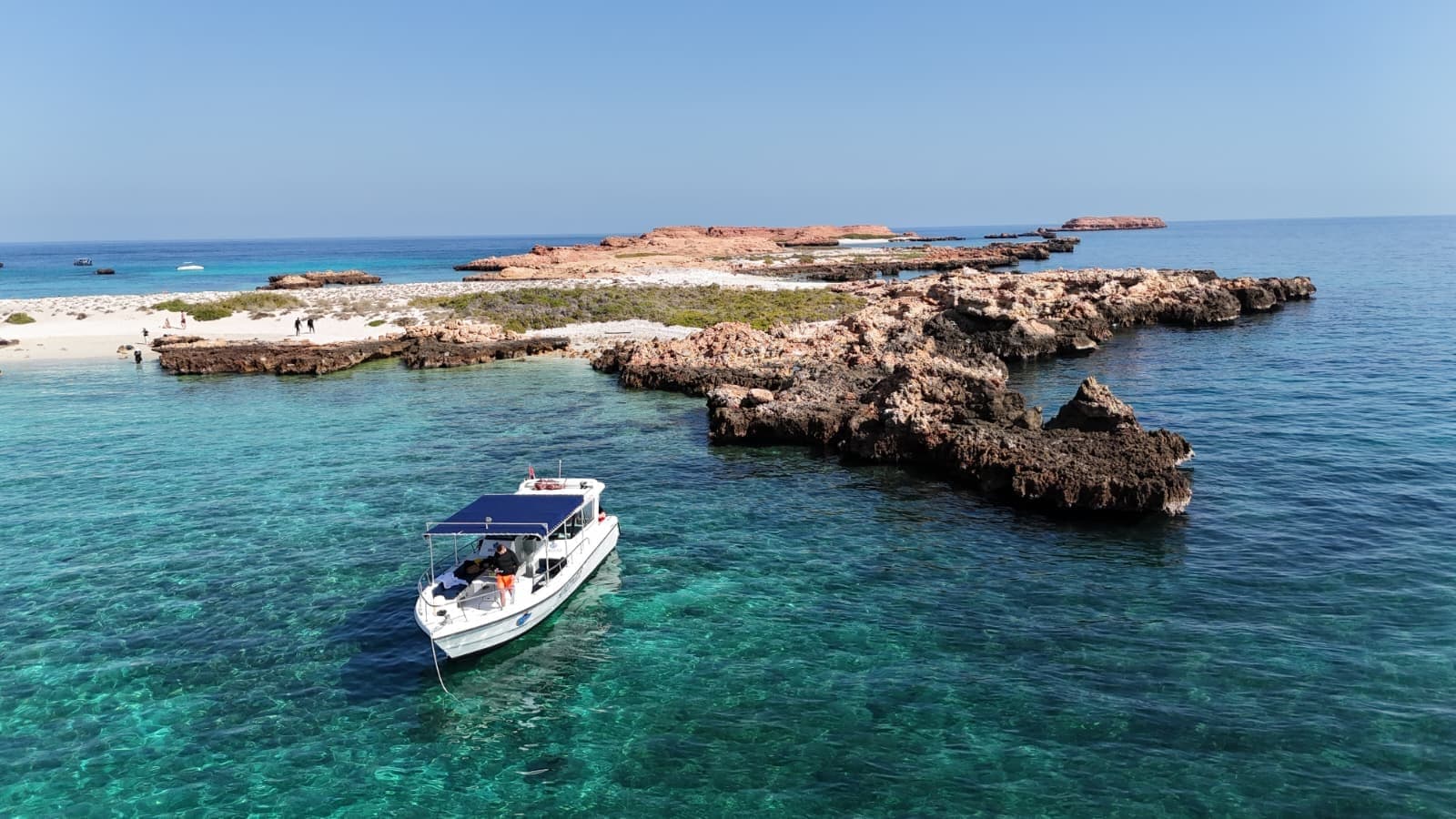
Cover photo: [dronepicr](https://commons.wikimedia.org/wiki/File:Limestone_rocks_in_Al_Dimaniyyat_Islands_Nature_Reserve_in_Oman_%2853698184390%29.jpg), CC BY 2.0 — taken at the Daymaniyat Islands.