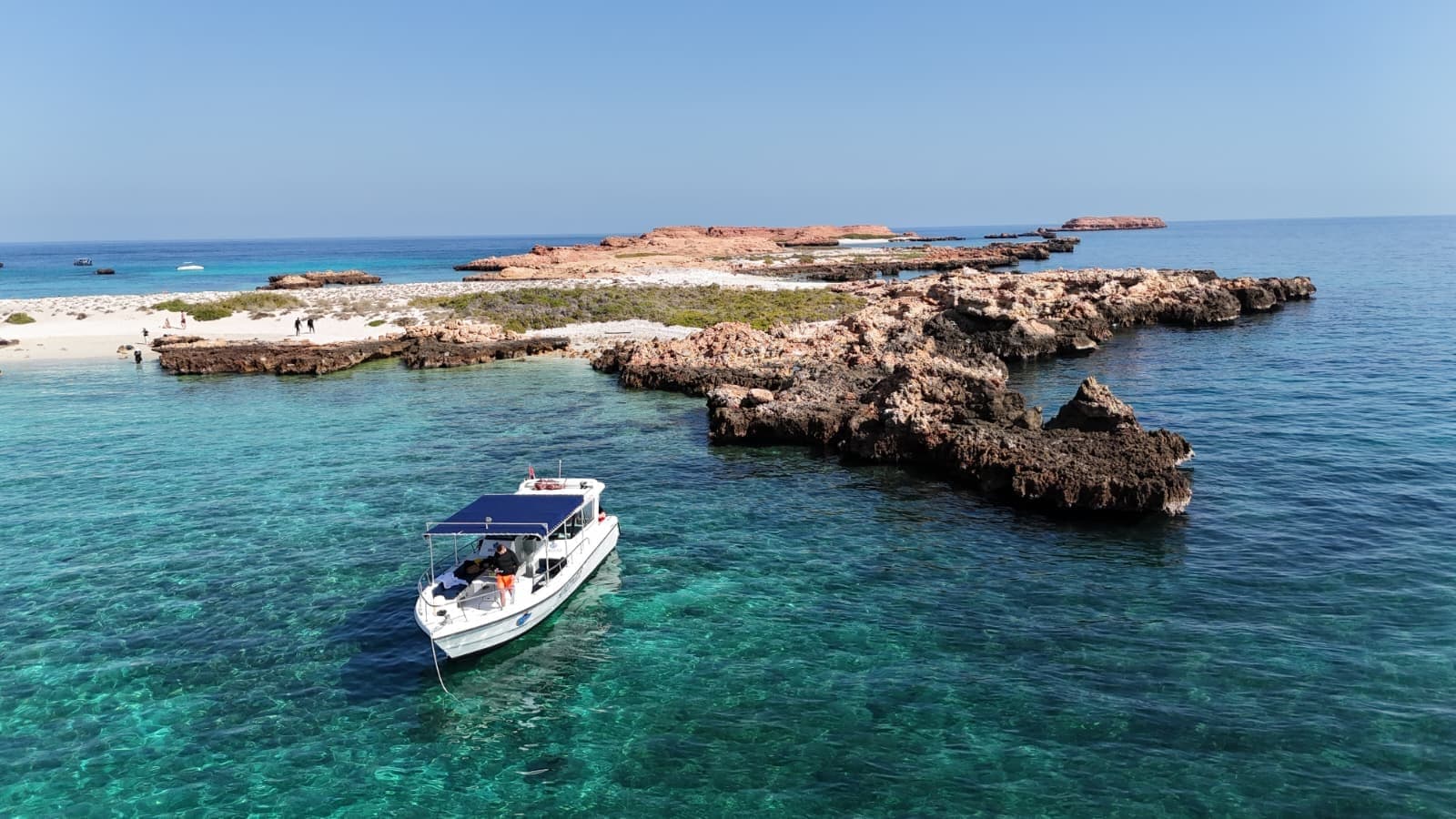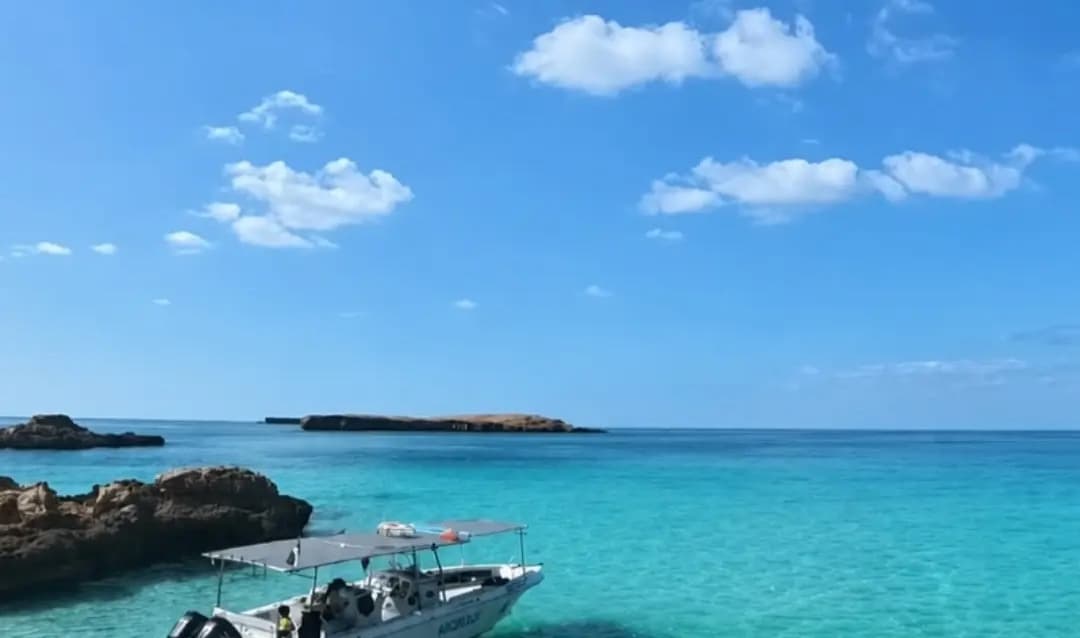
Tell someone you're visiting Muscat in July and you'll get the same look everywhere: why would you do that to yourself? And on land, fair enough — Omani summer is not subtle. But here's what the look misses: the best of Oman's summer doesn't happen on land. It happens 18 km offshore, where the sea breeze runs across the deck, the water is bath-warm, and the biggest fish in the ocean has just arrived for the season.
We run trips to the Daymaniyat Islands all summer, and summer guests consistently step off the boat saying a version of the same thing: that was nothing like I expected. This is the honest guide to why — and how to do it comfortably.
What Summer Actually Feels Like on the Water
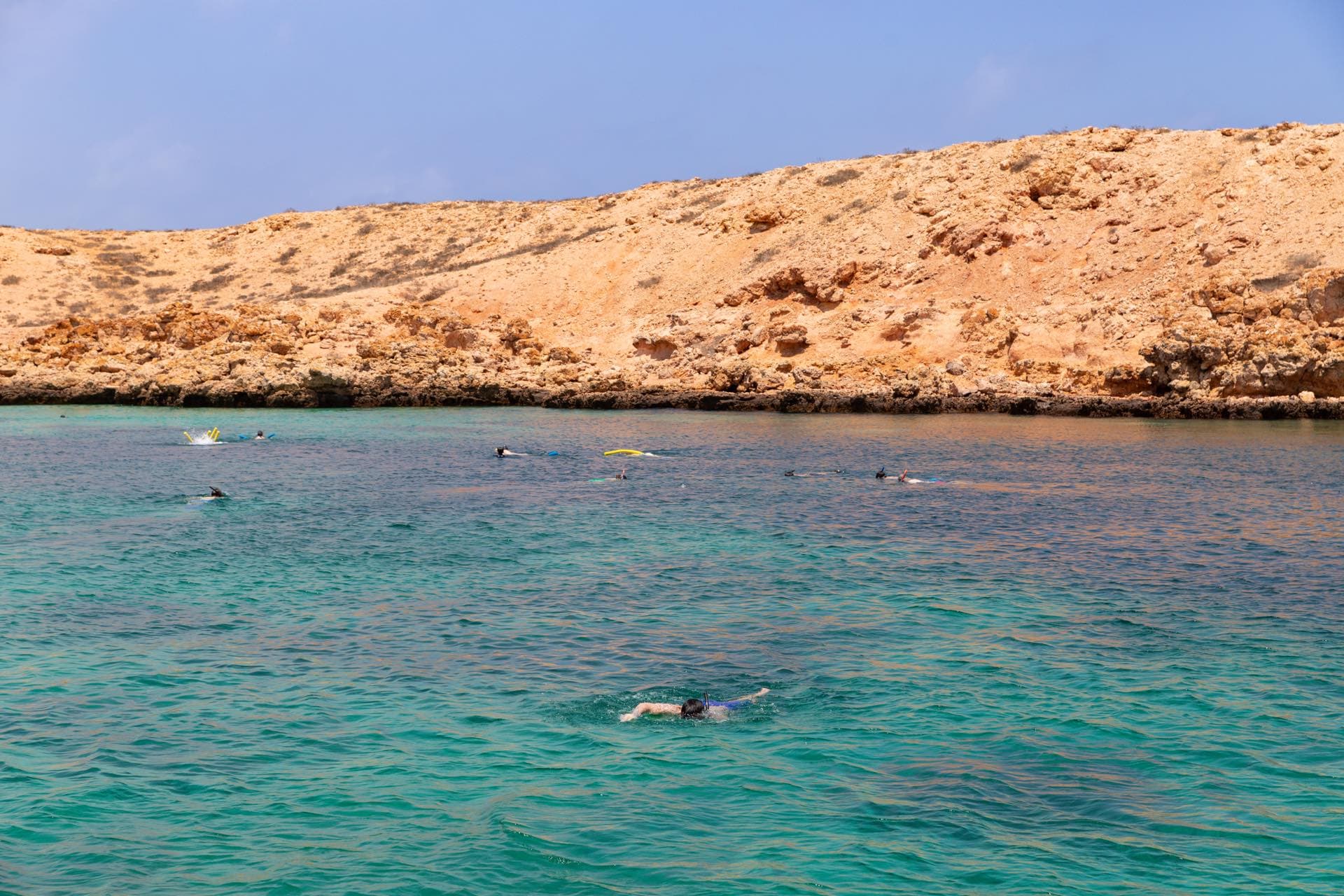
The crossing from Al Mouj Marina takes 45–50 minutes, and from the moment the boat moves you have wind. Not the oven air of a car park — genuine sea breeze. On board there's shade; in the water there's nothing to endure at all. The sea sits at 28–31°C through summer, which means you can float over the reef for an hour without a wetsuit and without ever feeling cold. For snorkelling specifically, that's as good as water gets.
The seas are typically at their calmest too — long, glassy mornings that make the crossing easy and the visibility dependable. And because most visitors write the season off entirely, the reserve is at its quietest. Some mornings it feels like the reef is running a private viewing.
The city in July belongs to air conditioning. The sea in July belongs to whoever shows up.
The Whale Shark Bonus
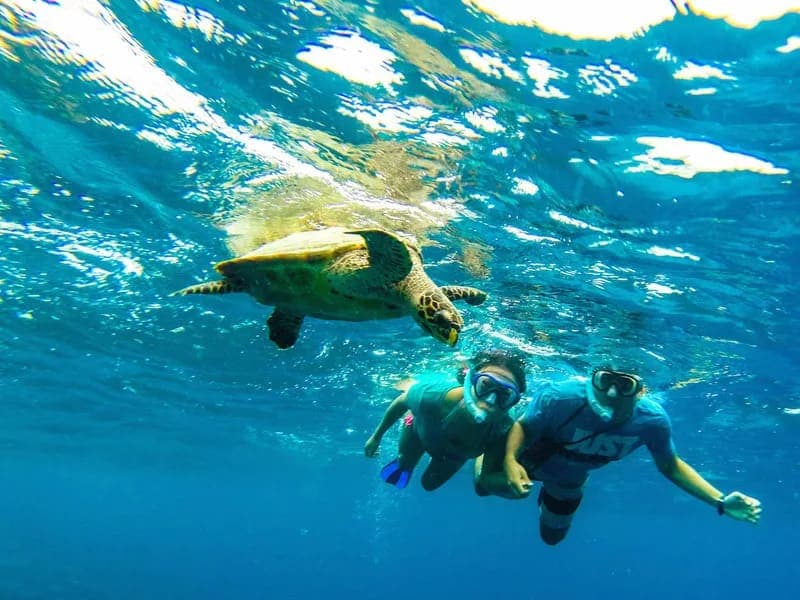
Summer isn't just tolerable at the Daymaniyats — it's the main event. Whale shark season runs June to November, peaking from late August to early October, when the plankton blooms pull the giants through the reserve. If swimming beside a 6-metre filter feeder is on your list, summer is precisely when to come. We've written a full, honest guide to your odds and how encounters work in our whale shark season guide.
How to Do Summer Right: The Checklist
Summer trips reward a little preparation. None of it is complicated:
- Hydrate like you mean it. Chilled drinking water is provided on every trip — drink it steadily, not just when you're thirsty. Between sun, salt and swimming, summer pulls water out of you faster than you notice. Start hydrating the evening before; skip the heavy coffee run on the morning of.
- Reef-safe sunscreen, applied early. The sun on the water is doubled — once from above, once off the surface. Put sunscreen on before you board (it needs 15–20 minutes to bind to skin), and top up after each swim. Choose reef-safe: the Daymaniyats are a protected nature reserve, and what washes off you ends up on the coral.
- A hat and sunglasses. The simplest, highest-value items on the boat. A brim between you and the sun changes the whole day; polarised sunglasses let you spot turtles from the deck before anyone else does.
- A light long sleeve or rash guard. The single best sun strategy for snorkellers — it never sweats off, never washes off, and means your back (the part that faces the sun for an hour while you float) is simply covered.
- Sea-sickness tablets — always carry them. Summer seas are usually kind, but 'usually' is doing some work in that sentence. If you're even slightly prone to motion sickness, take a tablet 30–60 minutes before departure, not when you start feeling it (by then it's too late to help much). If you never need them, they cost you nothing. If you do, they save the day. This is the cheapest insurance in travel.
The Shape of a Summer Trip Day
We schedule around the heat, not against it. Morning departure from Al Mouj Marina while the air is still soft, the crossing with the breeze, two or three snorkel stops through the brightest, clearest hours — most of which you spend in the water — and you're back at the marina before the afternoon peak. The hottest part of an Omani summer day happens while you're showered, fed, and looking through your photos somewhere air-conditioned.
Who Summer Trips Suit
Honestly? Almost everyone, with one caveat. Families do well — kids tend to love that the water needs no bravery in summer. Visitors on a stopover get the best sea conditions of the year. The caveat: if you struggle badly with heat even with shade, breeze and water, winter's cooler air might suit you better — our complete Daymaniyat guide breaks down what each season does best. We'd rather you pick the right month than just the next one.
Book the Cool Version of Summer
The sea is warm, the giants are in town, and the boats are quieter than they'll be all year. Book a summer snorkelling trip — we'll have the water cold, the shade ready, and the reef exactly where we left it.
Chilled water and snacks are provided on every trip. Bring your sunscreen, hat and tablets — and we'll handle the rest.